Gas water heaters are used by many families for providing reliable, low-cost, high-performance hot water. Since water heating accounts for a major part of total household energy consumption, your selection of equipment is important.
The advantages of modern water heaters (over earlier models) consist of increased energy efficiency along with improved consistency. Properly designed, installed and maintained, these systems can assist in lowering energy costs while increasing the performance of the equipment. This document discusses how a gas water heater operates and how it can be used to support greater energy efficiency.
How Does a Gas Water Heater Support Increased Energy Efficiency?
A gas water heater utilizes natural gas or propane to rapidly warm the water. The flame heats either the storage tank itself or a heat exchanger inside the storage tank. Gas heated systems generally operate faster than electric systems.
Increased speed (of operation) increases energy efficiency due to less total running time of the system. Most consumers select gas systems primarily for this reason. Gas systems also produce continuous (hot) water.
Additionally, many of the newer designs have better insulated tanks and/or upgraded burners. These improvements help minimize wasted heat during the operational cycle of the equipment and contribute to greater energy efficiency.
Types Of Gas Water Heaters
There are two primary types of gas water heaters: Tank type and Tankless type. Each type has distinct characteristics and advantages/disadvantages.
Tank-type systems are equipped with a storage tank to hold pre-heated water until it is utilized. As such, tank-type systems are less expensive to purchase initially; however, they do experience heat loss over time which negatively impacts energy efficiency.
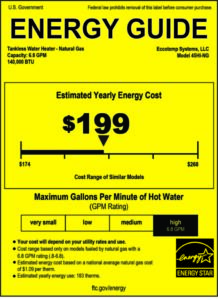
Tankless-type systems only heat water as needed. In comparison to tank-type systems, the tankless design minimizes lost heat and therefore, improves energy efficiency. Additionally, tankless systems will provide unlimited amounts of hot water.
As such, there are many consumers that upgrade to tankless systems primarily for the purpose of improving long term energy efficiency.
Ways To Simply Increase Energy Efficiency
To simply increase the performance of your gas water heater, there are several basic actions you can take:
First: Once per year, flush the tank. Sediment accumulation in the bottom of the tank reduces heating rate. Cleaner systems operate more effectively and resultantly improve energy efficiency.
Second: Lower the thermostat on your gas water heater to around 120° F. Reducing the temperature of your hot water system decreases your energy consumption and still allows for acceptable levels of hot water.
Third: Wrap insulation around the tank and all exposed piping. Insulating prevents the escape of heat into the surrounding air and contributes to higher overall energy efficiency.
Fourth: Regular inspection/maintenance/repairs also significantly aid in maintaining optimal performance. If a problem arises early on, a qualified technician can identify the issue prior to it developing further.
Reducing Monthly Bills via Improved Energy Efficiency
Improved energy efficiency translates to lower monthly bills. Gas water heaters utilize fuel much more efficiently than earlier models. Therefore, reduced energy usage equates to lower operational costs.
While High-Efficiency Models are typically more expensive up front, they will continue to save you money throughout their useful life by consuming less energy.
In addition to reducing monthly utility bills, certain energy-efficient systems may qualify for rebates. Rebate programs assist in offsetting the initial cost associated with upgrading your equipment.
Selecting a system with superior energy efficiency enables you to save money each month/year.
Positive Environmental Impact via Energy Efficiency
Energy efficiency also positively impacts the environment. By utilizing less fuel and emitting fewer pollutants, efficient systems minimize waste produced by inefficient systems.
Compared to earlier models, modern gas water heaters produce substantially less waste. Furthermore, using less energy conserves natural resources.
Therefore, consumers who implement practices leading to increased energy efficiency decrease their overall environmental footprint. For this reason alone, implementing efficient systems represents a wise decision for both short-term and long-term planning purposes.
When Is It Time To Upgrade Your Old Gas Water Heater?
Older systems gradually lose their ability to maintain energy efficiency. As such, older systems may require longer times to heat your water and consume additional fuel to achieve the desired temperature.
If your system is over 10 years old, it would likely benefit greatly from being replaced. Additionally, rising energy bills coupled with inconsistent temperatures indicate a need to replace your old system.
Repeated repairs often signify that your old system’s life cycle is nearing completion. Installing a new gas water heater will undoubtedly result in increased energy efficiency and dependability.
Replacing your current gas water heater today can potentially avoid future larger issues.